

Inspirational People
Sheikha Intisar Salem Al Ali AlSabah "The Peacemaker"
by Ghada Kallas
15-June-2023
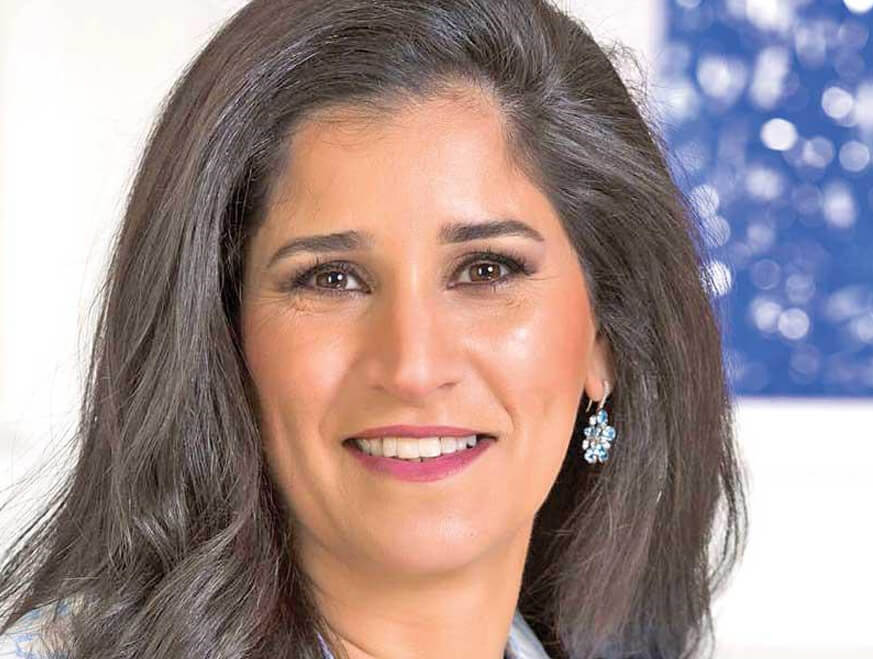

She believes that "empowering Arab women who have been affected by war and violence can transform them into influential peacebuilders in the Arab world." Guided by this conviction, and driven by her deep cultural awareness, insightful vision, and natural compassion for women who have endured trauma and painful experiences, she founded the Intisar Foundation to implement effective psychological approaches that help alleviate the lasting effects of trauma among Arab women.
She is Sheikha Intisar Salem Al Ali Al Sabah—a Kuwaiti by nationality and Arab at heart. Her efforts have gone far beyond providing psychological support to thousands of Arab women suffering from the consequences of conflict and violence. She has also launched a number of successful initiatives aimed at empowering women and strengthening communities. Among them is Al Nowair, an anti-bullying initiative that became the first non-profit educational organization in Kuwait to present its work to the United Nations.
She is a remarkable woman whose vision for awareness and education is matched only by her compassionate heart and commitment to serving others. Her achievements have positively impacted more than 3,500 Arab women to date, earning her international recognition, including the French Legion of Honour and the Belgian Order of the Crown, among other prestigious decorations. Speaking about these honors, Sheikha Intisar says that what brings her the greatest joy is "seeing our team recognize the significance of what we are accomplishing... and when policymakers begin to appreciate the impact of our work."
Join us as we get to know Sheikha Intisar through this exclusive interview. This inspiring Arab woman has helped heal the suffering of countless women, empowering them to become leaders and peacebuilders in their many roles. Few are more deserving of the title "The Peacemaker."
Away from your humanitarian work that illuminated a dark side in the life of Arab women, what do you tell us about Intisar Salem Al Ali AlSabah, the human? Or rather, how do you define yourself?
I am an Arab woman who knows her value, and this is how I would like all Arab women to define themselves. Knowing one’s value has a timeless quality that transcends chapters of our history - our past celebrated many Arab women who held themselves in high regard, and our future will not be surprised by them either.
However, I consider it important to explain what it means to be an Arab woman who knows her value. In the words of one of the beneficiaries of Intisar Foundation who attended our psychological support program of drama therapy, it sounds like this: ”I started doing small actions to take care of myself. I felt as if I had regained my self-confidence, that I could once again be the leader and initiator that I had been prior to the 2020 Beirut port explosion,” Liza said.
I am especially proud of Afamia who first shared with us, "While I was growing up, due to the backwards mentality in Aleppo (Syria), many people believed that studying was not a good option for girls, hence I was removed from school after ninth grade.” Not longer after completing the Intisar Foundation group drama therapy sessions, Afamia became a certified Arabic literacy teacher and told us, "I feel that I am finally fulfilling my goals and dreams of education. After I was deprived of finishing school because of my close-minded community, now, in my 40s, I am finally getting educated. Plus, I not only got an opportunity to be a student, but also to help others who want to learn too."
An Arab woman who knows her value is a woman who knows how to bridge and transcend the past narrative that she grew up with about women’s roles in society with an updated and more empowering story about herself and her future. This bridging can be supported in different ways, from wearing a piece jewellry that will serve as her self-empowerment tool, to gaining education in positive thinking and wellbeing, or to attending culturally informed psychological support program that will heal not only her but her family and community as well.
Transcending a past narrative can be a process filled with struggles and backward steps, but I urge our women to persevere on that path, because that is the only way to effect change for all other Arab women. You have to lead by example, and it is my wish that you all will go through this with more ease and joy.
Tell us about Intisar, the Writer, in the field of education and women empowerment, and about Intisar, the producer and entrepreneur.
In 2011, I launched Lulua Publishing - ‘lulua’ means ‘pearl’ in Arabic and encapsulates the journey from suffering to fulfilment - the first publishing house in the Arab world focused on publications about wellbeing, personal growth, and empowerment. Its motto was “You, but simply better.” Until 2017, Lulua Publishing was known for its monthly publications "Good Health Arabia" and “Vacations & Travel”.
Then, I founded Lulua Production House, a boutique film production company, and from 2014 to 2017, we produced four award-winning films that showcase her Kuwaiti heritage and promote high ethical standards and values. The latest of the four films, “Saat Zaman”, was released in 2019. All four films received national and international acclaim.
I also published two books that promote Kuwait - “The Alchemy of Wisdom”, an art book celebrating the achievements of 48 inspirational Kuwaitis, and “Kuwait in 400 Years”, a first-of-its-kind book that documents the history of Kuwait in over 1,300 pictures. Then, in 2020 I published the “Circle of Love” book which features deeply personal stories of resilience of 87 magnanimous women from Kuwait, the MENA region, and around the world, including Princess Dina Mired of Jordan, Afef Jnifen, Yasmin Le Bon, Radhika Khimji, Maria Buccellati. Illustrated by Max Vadukul, a world-renowned British photographer noted for his portrait photography, the book sends a powerful message of support to all women, encouraging them to be heard and seen through vocal and visual expressions of their own merited stories. All proceeds of the book purchase go to Intisar Foundation.
All this work stems from my belief that media and art are particularly effective in influencing behaviour and attitudes.
In the life of each of us, there is a pivotal event that makes us choose our path and follow it with determination and persistence. So, what is that incident or circumstance that shaped the personality of Intisar, the giving?
In the early hours of August 2, 1990, I witnessed the horror of Iraqi army trucks and tanks rolling across the flyover in front of my home, which marked the beginning of Saddam Hussein’s regime’s invasion of Kuwait.
For two days, my family waited under protective armed guard with our children before daring to move to what was believed to be the safety of my brother’s house opposite the Bayan Palace, the official office of the ruler of Kuwait. Then the invading forces began bombing the palace to subdue all resistance from the guards inside.
For two days, my family waited under protective armed guard with our children before daring to move to what was believed to be the safety of my brother’s house opposite the Bayan Palace, the official office of the ruler of Kuwait. Then the invading forces began bombing the palace to subdue all resistance from the guards inside.
I think that what affected me the most was that I wanted to shield my children from the pain and fear of what was happening. So, all I did was, or let’s say, all I tried to do, was to have fun with them. We would be dancing when the palace was being bombed. I would take them to the backroom of the house that we were in and we would just dance. Or we would go to another house and there would be gunshots, and I’d say, “Oh, they are just fireworks!”
Before long, the decision was made that the family – along with 15 children, their mothers and grandmother – should make a daring bid for the Saudi Arabia border to join my father, who had accompanied the Amir to the safety of Kuwait’s neighbour to evade Iraqi capture.
However, the passage of the family’s convoy of cars through the final frontier was refused. We had no choice but to speed through the checkpoint ahead. I remember that, amidst the hail of gunfire that followed, all I could do was huddle down and protect my terrified children. Several long minutes after, we were safely across the Saudi border.
Years later, my own personal victory over this psychological trauma has started fuelling my conviction to dedicate my life to empowering Arab women and all the women of the world.
I firmly believe that only by empowering women – pillars of families and societies – a positive change for all can be achieved.
What pushed Sheikha Intisar to choose the path of goodness and to uplift the mental health of women in particular from the clutches of wars and crises?
In 2017, in collaboration with the International Committee of the Red Cross (ICRC), I organised a roundtable and art exhibition entitled "Women in War”, to highlight the challenges faced by women in war-torn areas. The roundtable inspired 24 artists to collaborate on a book “Women in War”, but it was also then that I learned, to my dismay, that no mental health support was being offered to Arab women affected by war and violence.
Tell us more about Intisar Foundation.
As a philanthropist, I am committed to advancing psychological resilience of Arab women affected by war and violence.
Intisar Foundation’s mission - psychologically healing Arab women suffering from these traumatic experiences through the use of drama therapy - is directly linked to my vision of fostering Peace in the Arab world. I am convinced that empowering Arab women traumatised by war and violence can transform them into the Arab world’s most impactful Peacemakers.
Therefore, Intisar Foundation is a private initiative born from my desire to find and implement the most effective psychological approach for alleviating trauma in these Arab women.
Today, Intisar Foundation works on the self-empowerment of Arab women by (1) providing psychological support programs of drama therapy to Arab women impacted by the trauma of war and violence, (2) supporting the education of a generation of female Arab drama therapists, and (3) conducting in-house research to help offset the significant dearth of research in the field of drama therapy in the Arab world.
Each of these three strategic goals is directed towards achieving the foundation’s One Million Arab Women initiative, a 30-year plan to alleviate psychological trauma in one million Arab women impacted by the brutality of war and violence through the use of drama therapy.
To date, the foundation has conducted over 5,395 hours of field work and implemented over 405 virtual and field drama therapy sessions, reaching over 405 women in Lebanon and Jordan and close to 3,588 indirect beneficiaries.
Why did you choose the name “Victory” for the Foundation
It was the late Amir of the State of Kuwait HH Sheikh Sabah AlAhmad AlSabah, a United Nations recognised Global Humanitarian Leader, who advised my mother to name me Intisar - ‘victory’ in Arabic.
My uncle and my father His Highness Sheikh Salem Al Ali AlSabah, Commander of the Kuwait National Guard Forces and a doyen of the AlSabah Family, had both attended the 1964 Arab League summit in Alexandria, Egypt, which was held just a day before I was born.
Since I have had quite a few challenging life situations from which I emerged victorious, and it has become my legacy to help other Arab women to do the same.
Why did you specifically choose drama therapy for Arab women affected by war and violence? You say that self-empowered women can make a huge contribution to Peace… Tell us more
We have adapted this Western concept of drama therapy to the needs and nuances of Arab culture, because we have found it to be the most effective psychological tool for achieving great results in the shortest amount of time.
We looked at many different therapies, we ran programs in different therapies, and we realised that the arts were really good, but that drama therapy was spectacular. So, we stayed with it, and I haven’t regretted focusing on drama therapy even once since, because of seeing how it can change people, and women specifically.
For instance, after only one three-month program in a refugee camp in Lebanon, we have achieved these results with the Arab women who attended it: 78% experienced increased self-esteem, 68.75% experienced reduction in PTSD, 93.75% experienced reduction in depression, 75% experienced reduction in anxiety, 43.75% experienced improvement in satisfaction with life, and 75% experienced increased positive emotional experiences and decreased negative emotional experiences.
Also, we insist that our programs are delivered in Arabic and by Arab drama therapists. Why? It is because, for instance, many International NGOs come to the Arab world with good intentions of providing needed help but are not well-versed with the local context or the cultural nuances. One-on-one talk therapy has many barriers in the Arab world, there is a stigma surrounding mental health and seeking support, there is also a huge cultural barrier that comes between the therapist and the person in need of help.
To tell you the truth, when we started the Intisar Foundation, I was not thinking about Peace. I was just thinking about providing mental health support to women. When we started working with them, from day one, we started doing surveys and collecting data because we wanted to publish research, and so, from day one, we started seeing that these women were going to a completely different place from where we thought that they would go.
They became more Peaceful inside, less angry, less violent with their children, intolerant to violence towards their children, allowing their children to speak and show emotions, and the women themselves started doing that too.
We realised that we can make a big difference in the Arab world just by the capacity of building up these women and allowing them to realise their self-worth, their potential, and to find a Peaceful place inside of them. They also realise that they are more powerful than they ever thought of themselves to be. We see it over and over and over again.
So, these women were transforming, and after a year, we looked at all the data and realised that our work was beyond just mental healthcare. It is Peacebuilding at its most grassroots level possible. It is a bottom-up Peacebuilding.
Tell us about your "Al-Nowair" initiative to prevent bullying.
Al-Nowair, a non-government organisation which is envisioned as an incubator for national programs that use positive psychology to help bring about positive social behavioural change among young people in Kuwait, was launched on the UN International Day of Happiness (March 20) in 2013.
Today, its initiatives include Boomerang, Kuwait’s first anti-bullying school outreach program, Yelloworks, a first-of-its-kind corporate training program for building positive work cultures around Kuwait, and Yellow Window, an initiative to raise awareness on the benefits of a positive attitude amongst Kuwaiti governmental, public, or ministerial organisations.
However, Al-Nowair’s most impactful initiative for mobilising change is Barec, an educational program developed on the basis of scientific research in the field of positive psychology to establish a positive learning environment in schools. In 2018, the Supreme Council for Planning and Development (SCPD) included the Bareec initiative in the human development plan of New Kuwait Vision 2035 under the slogan “New Kuwait”. Furthermore, Bareec has been approved by the Ministry of Education of Kuwait, as a part of its new five-year plan for the development of education.
In January 2020, I took part in the 74th session of the United Nations General Assembly at the UN Headquarters in New York which was organised in celebration of the UN International Day of Education. I provided an overview of the impact of Al-Nowair’s Boomerang and Bareec programs in relation to Sustainable Development Goal (SDG) 4. In this manner, Alnowair became the first educational non-profit organisation in Kuwait to present its work to the United Nations.
To date, Alnowair has engaged 2,5 million people across four programs and 220 campaigns, and its youth oriented program which uses applied theatre to address bullying has positively impacted 15,100 students, 264 real life victims, bullies, and by-standers across 33 private schools. Its sister organisation Bareec has conducted +20 trainings while being implemented in 47 high schools and reaching more than 500 teachers and 11,600 students.
You also say that life will be better for everyone if we looked at it positively
Yes, looking at life with a more positive outlook creates hope, the ability to find solutions, mental wellbeing that allows one to go above the survivor mode but into the thriving mode. On the physical level, it lessens the stress that leads to illnesses and pain.
Over the years, I learnt that it is my responsibility is to be the best person that I can be, because when I am the best person that I can be, I will see the best in other people. When I am more positive and loving of myself, I start loving other people more. When I am positive and allow my light to shine, I allow other people’s light to shine too.
The Order of the Legion of Honor from France, the Order of the Belgian Crown and other honors that you have illuminated with your good achievements, what is the certificate of appreciation dearest to your heart?
Awards and recognitions make me feel so good because, firstly, it’s always beautiful to experience that what one is doing is being acknowledged by others.
The awards as such are not what makes my heart sign, but it is when our team realized that what they are doing is fantastic, and on top of that, when policy makers start paying attention to the impact that we have been making. Then, we can see how our work influences the policies and regulations. The real award for me is in these changes of policies and regulations due to the positive impact of our work.
We feel that you pay special attention to Lebanese women. What is your story with Lebanon? In your opinion, what is the Lebanese woman's greatest need after devastating wars, and the Arab woman in particular? What do you tell these women
We at Intisar Foundation are always rooting for all Arab women because we strongly believe that women are the champions of Peace in their homes, communities, and societies. Lebanon and Jordan are the countries where we started our work, and Lebanon is where we have had the largest number of programs, and where we have done the highest number of research projects because Lebanon has been through multiple traumas and also because people in Lebanon are very open to trying new things to feel better. I have a special place in my heart for Lebanon because that was our starting point from which we now plan to expand into more countries within the next 15 months.
Sheikha Intisar is very active and prolific. Where does she like to spend the rest of her free time, and how do you take care of Intisar? It is said that giving gives people unspeakable happiness. Tell us about this happiness
I don’t know how I find so much time to do everything, and it’s maybe because I’m very focused on one thing whenever I’m doing that particular thing. When I’m not working, I keep the same strong focus on my family, people I love, my garden, and so on. I love enjoying life. I’m very positive and happy person, and I believe that happiness reflects on my ability to do more and with less stress. I’m very blessed with being able to do so much and with no rush. I actually savor the moments!
Recommended

Yassmin Saleh Explores the Many Forms of Womanhood in “Everyday Forms”
11-September-2026
Rouba Kreidy, Founder & CEO of Create Agency: Redefining Resilience and Creativity in Times of Crisis
12-December-2025
Heddy Rassekh Talks About Her Spring/Summer 2026 Collection in Paris
13-November-2025
Most read
-
1
Kendall Jenner Makes Venice Film Festival Debut in ’90s-Inspired Style
-
2
ELIE SAAB and H&M Unite for a Celebration of Glamour and Timeless Elegance
-
3
No Mascara? No Problem Benefit Cosmetics Guide to the Bare-Lash Trend
-
4
Tod’s Celebrates the Art of Italian Living in Its Fall/Winter 2027 Campaign
-
5
Warm & Sensual Fragrances: 5 Early Autumn Perfumes We Want You to Try