

Celebrity - Interviews
“Nothing About You Needs Fixing”: Talia Rida on the Message Behind The Gifted Garden
Rim Nsouli
29-October-2026
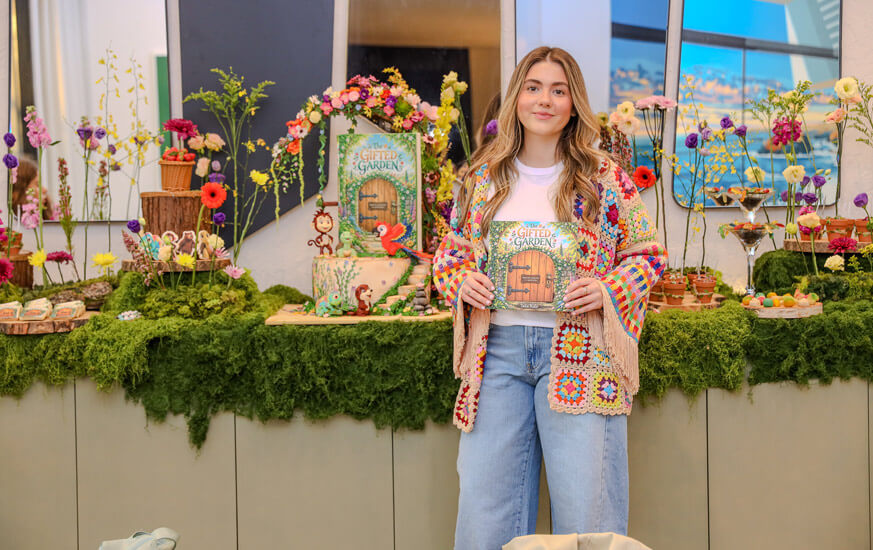

At just 17 years old, Talia Rida is making her debut as an author with The Gifted Garden, a children's book that explores individuality, inclusion and neurodiversity. Inspired by her own experience with ADHD, the beautifully illustrated story follows six friends, each with a unique way of experiencing the world, reminding young readers that differences are not flaws, but qualities to be embraced. Through the metaphor of a garden where every flower grows in its own way, Talia encourages children to celebrate what makes them unique. With all proceeds donated to charity, The Gifted Garden is more than a story about self-acceptance; it is a young author's way of fostering greater understanding, empathy and inclusion.
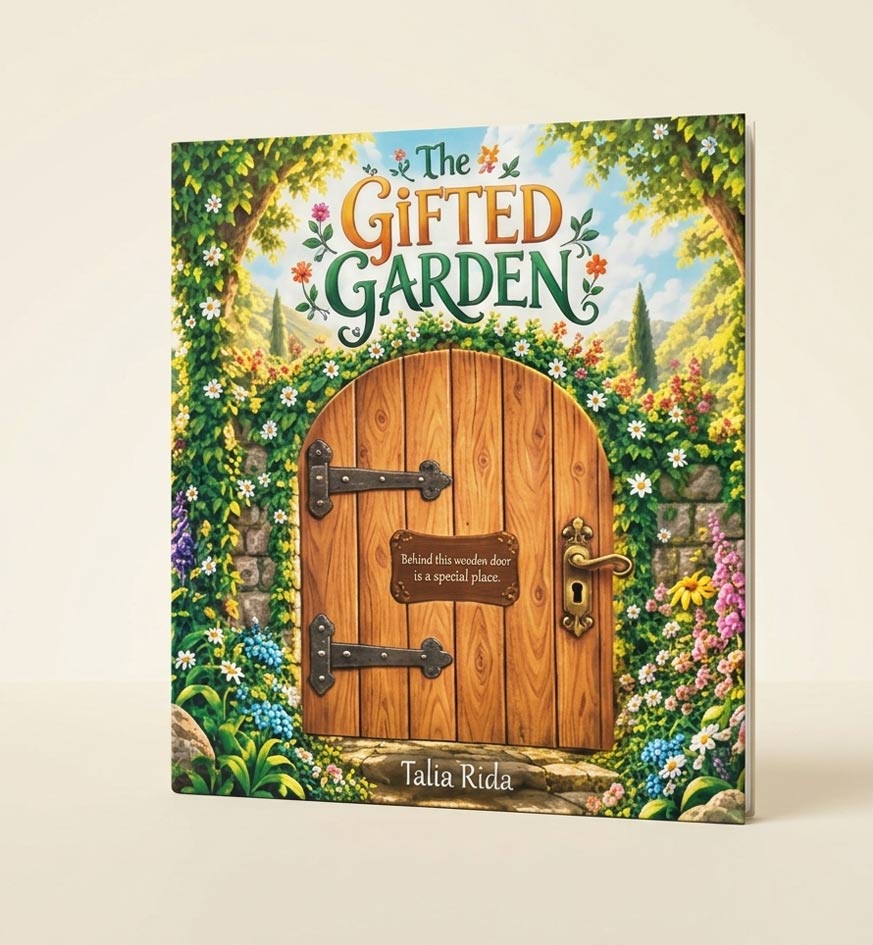
The Gifted Garden celebrates individuality and neurodiversity through the story of six friends. What first inspired you to write this book, and when did you realise this was a story you wanted to share with the world?
It started with my own story. For a long time, I tried to learn the way I thought I was supposed to, and it didn’t always work for me. Things changed when I stopped working against my brain and started working with it. Once I understood how my mind works, I realised that the things I had seen as weaknesses were actually strengths.
The moment I knew I wanted to share it was when I started thinking about all the children who are still where I used to be: trying hard to fit a way of learning that wasn’t made for them, and not having the words to explain why. I wanted to give them a story that tells them, gently, that there is nothing wrong with them.
The Gifted Garden began as a small seed of an idea: the belief that the world is beautiful because we are not all the same.
You drew inspiration from your own experience with ADHD. How was writing the book also a way for you to better understand yourself?
Very much so. Writing the book made me look closely at how different minds work, and the more I wrote, the more I recognised myself. I see a little of myself in most of the characters, and I’m familiar with the way each of their minds works: the busy mind that jumps from one idea to the next, the need to know what’s coming, the comfort of things being in their place, the days when everything feels a bit too loud.
Putting those experiences on the page helped me see my own mind more clearly, and more kindly. My experience with ADHD was the starting point, but writing about neurodiversity more broadly showed me that it isn’t about one label. It’s about the many different ways a mind can work, and the strengths that come with each of them.
It also taught me that understanding yourself isn’t a one-time moment. It’s something you keep learning, and telling your story is a big part of that.
The book presents differences not as flaws to be corrected, but as qualities that make each individual unique. Why was it important for you to communicate this message to young readers?
Because the way we see ourselves starts so early. If a child grows up believing that the way their mind works is a problem, that belief can stay with them for years. I know how that feels, and I didn’t want other children to carry it for as long as I did.
I wanted to show neurodiversity in a positive light, not as something to hide or fix, but as a different way of thinking that comes with its own gifts. In the book, none of the friends changes who they are. When the storm comes, each of them helps the garden precisely because of what makes them different.
I also wanted the message to reach the children sitting next to them in class. If every child learns early that different doesn’t mean less, we all grow up a little kinder.
Through characters such as Milo, who has a busy mind, and Olli, who finds comfort in structure and patterns, you explore different ways of experiencing the world. How did you develop these characters, and what do you hope children will recognise in them?
The book is about neurodiversity as a whole. Each of the six friends reflects a different kind of mind. I chose not to put labels on them, because I wanted children to meet them as friends first. But anyone familiar with these experiences will recognise them from the way each animal thinks and behaves.
I see a little of myself in most of these characters, and I’m familiar with the way their minds work, so I wrote them from the inside. For each one, I thought about what that way of experiencing the world feels like, and then looked for the strength hidden inside it. Milo’s mind feels like a firework show, always full of new ideas, and because he notices everything, he finds secret paths no one else would see. Olli, the otter, places smooth stones into neat little circles every morning. Not because they have to be perfect, but because his heart feels peaceful when everything is in its place. And because he notices the smallest details, the pond stays clean and healthy.
It’s the same with all of them. Tina the turtle needs to know what’s coming, so she helps everyone prepare. Cami the chameleon feels everything in a big way, so she senses the rain before anyone else. I hope children recognise themselves, or someone they love, in at least one of them, and see that what makes them different is also what makes them special.
What do you think parents, teachers and schools still misunderstand about ADHD and neurodiversity, and how can stories like yours help change those perceptions?
Awareness is definitely growing, and I’ve been lucky to learn in an environment that recognises that students learn in different ways. But children who think differently are still often mislabelled as “lazy” or “not trying hard enough”, and that is usually followed by comparisons with their peers. If children grow up believing that only one way of thinking is okay, they end up struggling with the way their own minds work, when in reality there are so many ways of thinking.
I also think the focus is still too often on what a neurodivergent child finds difficult, rather than on what they’re good at.
Many of these children have real strengths: creativity, energy, attention to detail, deep focus on the things they love, or the ability to see patterns others miss. When parents and teachers help a child discover those strengths and understand how their own mind works, the child can start using their differences to their advantage. That changes everything.
Stories can help because they open a conversation that might otherwise be hard to start. A parent reading The Gifted Garden with their child, or a teacher reading it to a class, can simply ask, “Which friend are you most like?” That one question can lead to a much bigger understanding.
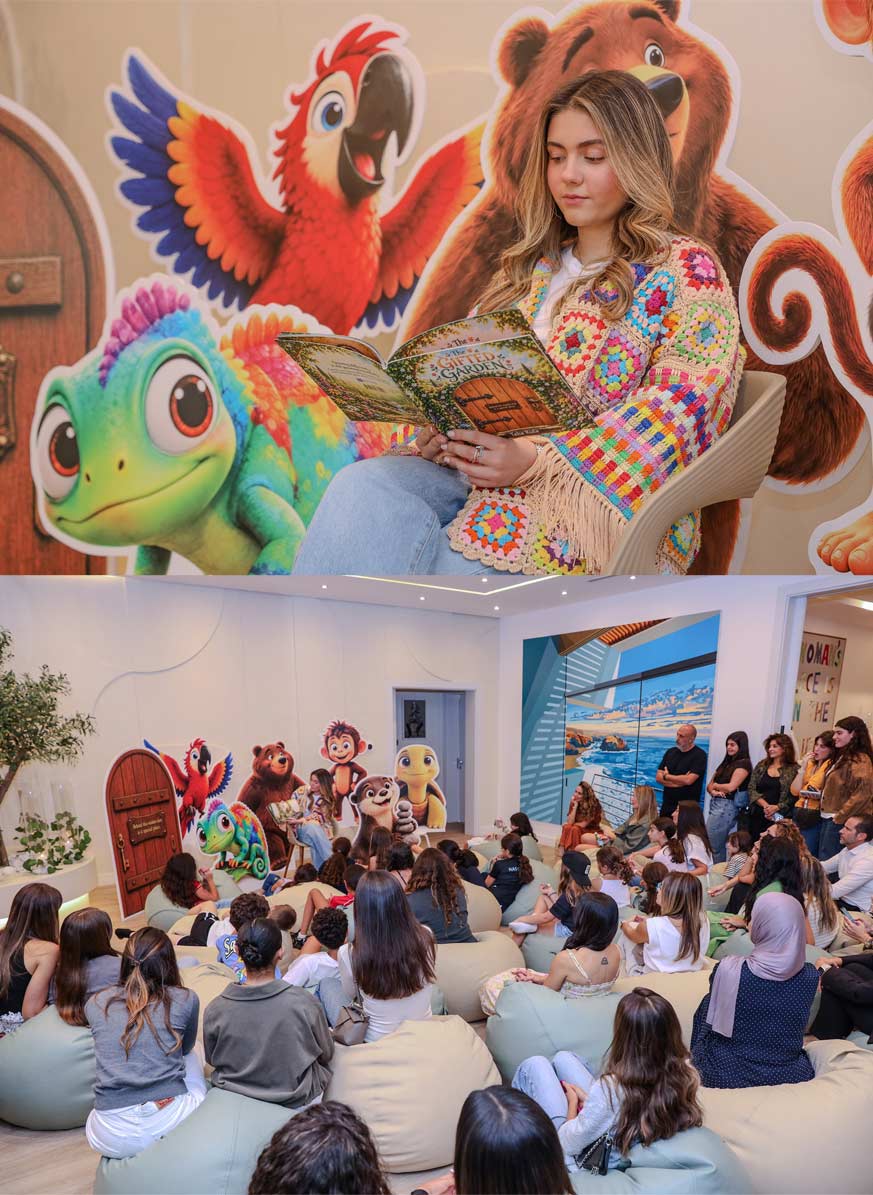
What has the experience taught you about yourself, and what was the most challenging part of bringing The Gifted Garden to life?
It taught me that I’m capable of more than I used to think. Many of the qualities that helped me finish this book, like creativity, energy and thinking outside the box, are the same ones I once saw as weaknesses. That was a powerful thing to realise at 17.
The most challenging part was finding a way to represent different neurodivergent experiences without turning the book into a lesson or a list of conditions. I wanted every trait to feel true and recognisable, but always positive. Deciding not to label the characters was a big part of that. It meant the story had to show who they are through what they do, which is harder to write, but much more meaningful for a child to read.
Balancing it all with my final year of school wasn’t easy either. But it taught me patience, commitment, and that you don’t need to have everything figured out before you take the first step.
Children’s books often communicate meaningful ideas through simple words and illustrations. How did you approach finding the right balance between making the story accessible to children and conveying a deeper message?
I tried to let the story do the work. Children don’t want to be told what to think; they want an adventure. So the book is a walk through a garden: you follow a vine, a feather, a leaf, and each one leads you to a new friend. The message comes through what the characters do, not through explanations.
I kept the words simple and close to how children actually feel. Tina tucks into her shell and takes slow breaths when the world feels too loud. Bruno finds that the words on signs seem to twist, so he finds his way by the shape of the hills and the smell of the pine trees. A child might not have the vocabulary for those experiences yet, but they will recognise the feeling.
The illustrations carry a lot too. The garden is full of colour and detail, so every reader can find something to notice, especially readers whose minds love to notice everything.
As a young author, how do you see yourself using your voice in the future? Would you like to continue writing stories that explore identity, mental health and the experiences of young people?
I would love to. This book has shown me how much a story can do, and how many people are looking for one that reflects them. I want to keep using my voice to help children and young people feel seen, whether that’s through writing or through talking openly about what it’s like to think differently.
Right now, my focus is on finishing school and sharing The Gifted Garden with as many children and families as I can, especially by reading it in schools. But I already know the garden has more friends in it than the six in this book, and I’d love to explore more of their stories one day.
If you could speak directly to your younger self, or to a child who feels different from everyone around them, what would you say?
I would say: nothing about you needs fixing. Your mind just works in its own way, and that way is valuable.
Take the time to learn how your mind works, and then work with it instead of against it. The things that make you feel different today might turn out to be the things that make you strong. You don’t have to grow like everyone else, and you don’t have to grow at the same speed. Growing differently is still growing beautifully.
And be as kind to yourself as you are to others. There will always be a place for you in the garden.
Recommended
Rachel K. on “GENESIS”: Transforming Discarded IQOS Devices into Art
9-October-2026

Jaeger-LeCoultre Unveils Passengers
25-May-2022

Three Fascinating Bling Watches That Confront The Economic Crisis
12-March-2021
Most read
-
1
Zuhair Murad Spring-Summer 2027: When the Sun Whispers
-
2
KIKO Milano Celebrates Madonna with an Exclusive Party at Chateau Marmont
-
3
Jimmy Choo Celebrates 30 Years with “Pearls of Wisdom”
-
4
SLICKHAIR: Your Secret to Perfect Slick Hairstyles
-
5
Anthony Vaccarello’s SS27 Is a Golden Love Letter to Saint Laurent